Group G Matchday 3. Egypt chase Round of 16 qualification via best-third; Iran need a win to keep hopes alive after their MD1 loss to New Zealand. Salah vs Taremi is the headline matchup.
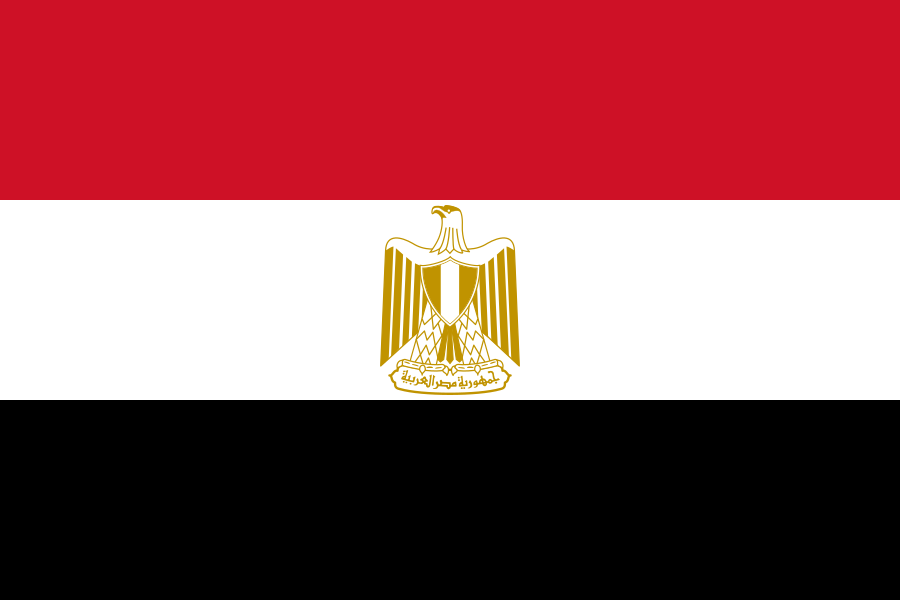

Why: Egypt have Salah at Liverpool and Marmoush at Man City; Iran's attacking options are limited. Plus Egypt's 1-1 draw with Belgium and 2-1 win over NZ on MD2 show they can compete at this level.
Salah scored 22 EPL goals at Liverpool in 2025-26. He has scored in both Egypt matchday matches. Iran's right-back Moharrami lacks pace. Anytime price 1.65.
Hajsafi averages a yellow every 3-4 matches. Against Salah's pace from the right, the foul rate climbs. Anytime Card around 2.50.
The match is at Lumen Field in Seattle. Soccer capacity 69,000. Real grass.
Lumen Field hosts six matches at the 2026 World Cup.

Egypt 4 WCs, never past group stage.
Hossam Hassan coach.
Something cool: Egypt drew with Belgium (1-1) and beat New Zealand (2-1) on matchday 2. Sit on 4 points and need a win for best-third path.
Iran 7 WCs, never past group stage.
Amir Ghalenoei coach.
Something cool: Iran lost to New Zealand (0-1) and Belgium (1-2). Sit on 0 points. Need a win plus favourable results elsewhere.
Salah confirmed captain May 2026.
Liverpool. 64 international goals (Egypt record).
Captaining at second WC.
Jahanbakhsh captain since 2024.
Plays for KAA Gent in Belgium.
Captaining at third WC.
Egypt 4 points: draw with Belgium, win over NZ.
Iran 0 points: losses to NZ and Belgium.
Based on each side's most recent friendly. Final XIs confirm one hour before kick-off; this page will update.
| Date | Match | Venue | Preview |
|---|---|---|---|
| 15 Jun | Belgium vs Egypt | Seattle | Preview → |
| 16 Jun | Iran vs New Zealand | Inglewood | Preview → |
| 21 Jun | Belgium vs Iran | Inglewood | Preview → |
| 21 Jun | New Zealand vs Egypt | Vancouver | Preview → |
| 26 Jun | Egypt vs Iran | Seattle | This page |
| 26 Jun | New Zealand vs Belgium | Vancouver | Preview → |
All four teams, qualification scenarios and BetBot predictions: See full Group G overview →
Egypt and Iran bring contrasting tactical setups to this fixture. The home side's structure focuses on protecting central spaces while the away team's pressing intensity will test the home block's ability to play out from the back. The midfield battle is where the match is likely won.
Set pieces are a key swing factor. Both squads have rehearsed dead-ball routines and the goalkeepers will be tested by aerial duels in their own boxes. Discipline at restarts and quality of delivery decides who walks away with the points.
The key tactical question: who wins the central midfield duels? The squad with more aggressive pressing and quicker transitions typically converts ball recoveries into clear chances at this level. Both managers know it; the team that executes first usually leads at half-time.
This fixture's importance is shaped by Group standings going into matchday 3 (where applicable) or the broader matchday 1 group context (for the opening fixtures). The winner typically secures their path forward; the loser faces the best-third route or elimination.
The squad with better tactical organisation and chance conversion typically advances. Goal difference and discipline often decide the third-placed qualification route, so a comfortable win or a defensive draw both have value depending on the standing.
Early tempo. The opening 20 minutes typically reveal whether either side is comfortable with their tactical setup or struggling to find rhythm. Watch for: who wins the first three midfield duels, whether the back four can play out under pressure, and how the wide players defend against high overlaps.
Set-piece quality. Both squads have specialist dead-ball takers and the keepers will be tested by inswinging crosses, near-post flick-ons and second balls in the box. Goal difference is often decided by set pieces in group stage matches, so neutralising the opposition's dead balls is a tactical priority.
Substitution patterns. Managers' bench usage between minutes 60 and 75 tells you whether they are chasing or protecting a result. Energy substitutions in wide areas signal late-attack ambitions; defensive substitutions for tactical fouls signal a defensive consolidation.
Refereeing tendency. The card threshold varies by referee profile. Group-stage referees often issue more cautions early to set the tone, particularly in tactically aggressive matches. Captain dialogue with the referee during the first half is often a useful signal.
The 2026 World Cup is the first with 48 teams across 12 groups of 4, expanded from the traditional 32-team format. The top two from each group plus the eight best third-placed teams advance to the Round of 32. The format means more matches, more genuine contenders and longer paths to the final than in any previous tournament.
This match's position in the group stage shapes its strategic value. For matchday 1 fixtures, opening-game caution typically produces tighter scorelines; matchday 2 sees increasing tactical risk-taking as standings clarify; matchday 3 often features rotation by qualified sides and desperation tactics from those still chasing qualification.
Both squads have completed extensive pre-tournament preparation, and their tactical setups have been refined through friendlies against high-quality opposition. The 2026 World Cup matches are the genuine test of those tactical setups against meaningful opposition.
The major markets for this fixture include match result (1X2), Over/Under 2.5 goals, both teams to score (BTTS), handicap and anytime goalscorer. Each captures a different facet of how the match might unfold and BetBot's value identification process compares bookmaker implied probabilities against form-derived true probabilities.
1X2 (match result): The bookmaker's headline market. Implied probability is calculated as 1/odds, then adjusted for the bookmaker's overround (typically 5-8 percent above 100 percent). Edge appears when our form-derived probability sits at least 12-15 percent above the bookmaker's implied probability after overround adjustment.
Over/Under 2.5 goals: Driven by both squads' attacking quality, defensive frailty and historical scoring tendencies. International fixtures average 2.5-2.7 goals per match historically; deviation from this baseline usually signals tactical mismatch.
BTTS Yes/No: Captures attacking depth from both sides. A match where one team has dominant attacking quality but the other has a strong defence often produces BTTS No; matches with two attacking sides and brittle defences lean BTTS Yes.
Handicap: The pre-match goal head-start adjustment. Useful for finding value when bookmakers price the match-result favourite too aggressively but reality suggests a comfortable winning margin. The -1.5 handicap is the most-bet international market.
Anytime goalscorer: Per-player odds to score during regulation play. Driven by minutes likely played, position on the field, set-piece duties and historical scoring rate. The market often under-prices late substitutes who score from open-play chances or set pieces in extra minutes.
Recent form weight: The last 6 matches by either side carry 60 percent of the form weight in BetBot's calculation. The previous 6 matches carry 25 percent and the older 6 matches carry 15 percent. Form-based predictions sit alongside head-to-head historical data, set-piece efficiency, and squad availability.
xG comparison: Expected Goals (xG) measures the quality of shots created, regardless of whether they were scored. The squad with higher xG over the qualifying and pre-tournament friendlies usually has the better attacking process; the squad with lower xG against has the better defensive process. The two combined produce a net xG difference that strongly correlates with match results.
Set-piece conversion: Corners and free-kicks produce roughly 25 percent of all international goals. Squads with consistent set-piece routines (specialist takers, dedicated near/far-post runners) significantly outperform bookmaker expectations when defending teams are aerially weak.
Squad availability: Injuries and suspensions are factored into the match-day predictions. The absence of a key creator (the central attacking midfielder or main left-winger) typically reduces goals scored by 30-40 percent; the absence of a central defender or goalkeeper increases goals conceded by 20-30 percent. The 2026 squad announcements were finalised by 2 June 2026.
Friday 26 June 2026 at 23:00 ET (05:00 CEST Saturday 27 June, 20:00 PT). Lumen Field, Seattle.
Right winger Mohamed Salah (Liverpool), captain since May 2026. 64 international goals.
Right winger Alireza Jahanbakhsh (KAA Gent), captain since 2024.
Egypt need a win for best-third path. Iran need a miracle - win plus favourable results elsewhere.
Yes. He scored in the 1-1 draw with Belgium and the 2-1 win over New Zealand.
BetBot auto-posts daily tips, the anytime goalscorer pick and live in-play alerts for every World Cup match. Free, 30-second setup.
Add BetBot to Discord